

Adults can manage many ADHD challenges without medication by combining skills-based therapy such as CBT, practical systems for time and tasks, steady sleep, regular exercise, and support at work. These approaches can make daily life easier, but research has not shown them to work as well as medication for core ADHD symptoms. They work best as part of a plan you build with a qualified professional.
This guide explains what the research says, which strategies are worth trying first, how to ask for help at work, and where to find ADHD support in Baltimore and across Maryland.
Can Adults Really Manage ADHD Without Medication?
Yes, many adults use non-medication strategies to manage ADHD, either on their own or alongside medication. People choose this path for different reasons. Some have side effects, some have health conditions that make medication harder to use, and some simply want to build skills first.
It helps to know what the evidence says before you start. The largest review of adult ADHD treatments so far, published in The Lancet Psychiatry in 2025, pooled 113 clinical trials with 14,887 adults (Ostinelli et al., 2025). It found:
- Stimulants and atomoxetine were the only treatments with clear evidence of reducing core ADHD symptoms in the short term.
- Results for non-medication treatments were less consistent. Some non-medication approaches showed benefits when clinicians rated symptoms, but not when patients rated their own symptoms.
That does not mean non-medication strategies are useless. Core symptom scores are only one measure. Many adults use therapy, routines and environmental changes to handle the things ADHD makes hard in real life: deadlines, bills, appointments, relationships and follow-through.
The National Institute of Mental Health (NIMH) lists both medication and psychotherapy, such as behavioral therapy and cognitive behavioral therapy, as common treatments for adults with ADHD. It also notes that effective treatment often combines several approaches, and that people sometimes need to try more than one before finding what works (NIMH).
Important: If you currently take ADHD medication, do not stop or change it without talking to your prescriber first.
Therapy Options for Adult ADHD
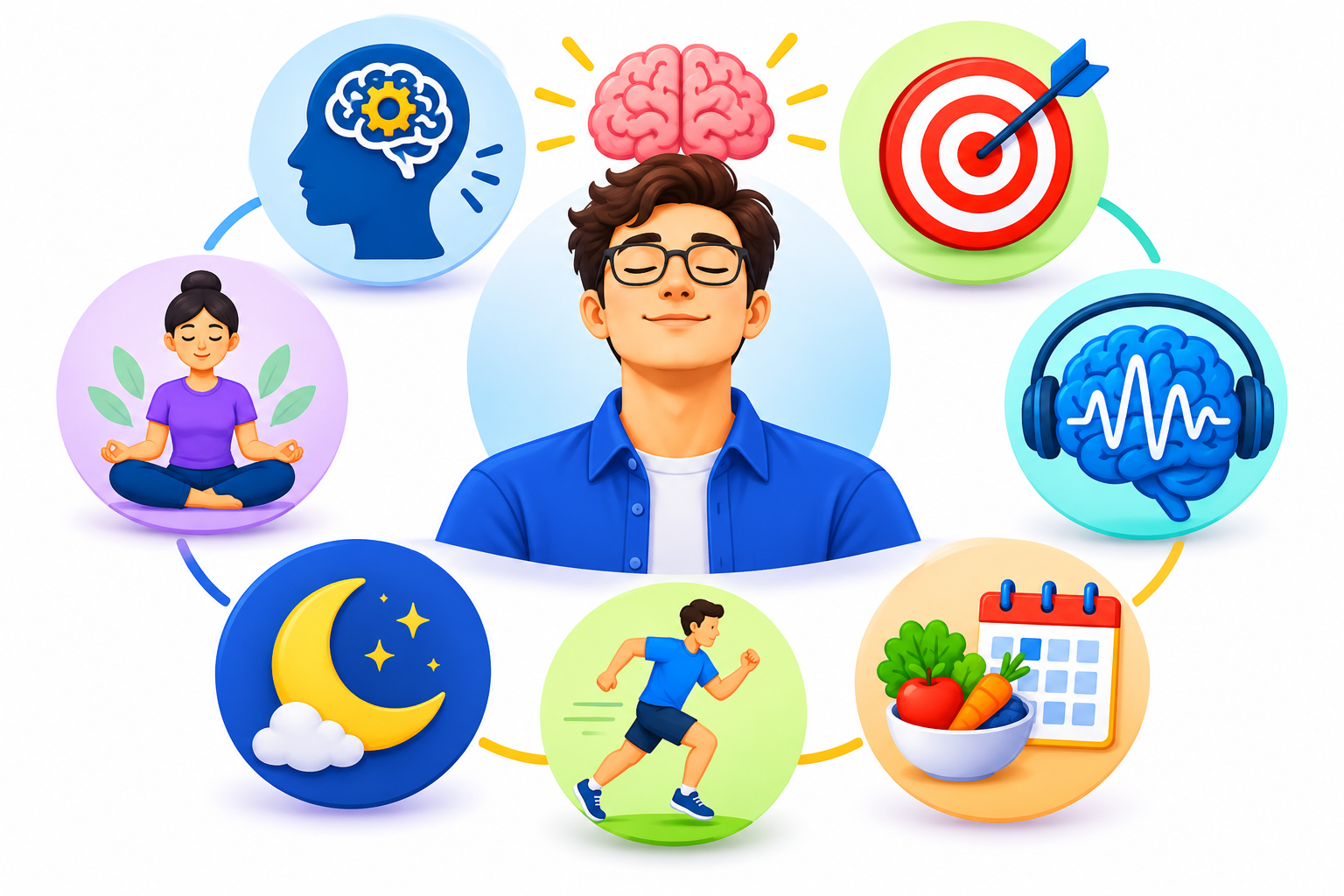
Cognitive Behavioral Therapy (CBT) for Adult ADHD
CBT for adult ADHD is different from general talk therapy. It focuses on practical skills: organizing and planning, managing distractions, coping with frustration, and changing the unhelpful thought patterns that often build up after years of struggling with ADHD.
One well-known program, Mastering Your Adult ADHD, was developed at the Cognitive Behavioral Therapy Program at Massachusetts General Hospital. It starts with education about ADHD as a real neurobiological condition, not laziness or a lack of intelligence, and then teaches organizing and planning skills (CHADD). The program was originally designed for adults who were also taking medication, which is a useful reminder that therapy and medication are not either/or choices.
CHADD, the national ADHD nonprofit, also recommends working with therapists trained in CBT for ADHD (CHADD). When you look for a therapist, ask directly whether they have experience treating adults with ADHD.
How Baltimore Counseling Center approaches adult ADHD: We build a personalized treatment plan for each client. Depending on your needs, it can combine CBT, behavioral strategies such as organizational skills training and routine building, and ADHD coaching focused on time management and organization. Group, couples and family therapy are also available, and remote sessions plus evening and weekend appointments can make it easier to stay consistent.
ADHD Coaching
ADHD coaching is a practical, goal-focused service. CHADD describes it as a relatively new field that targets core challenges such as planning, time management, goal setting, organization and problem solving. It is meant to complement other treatment, not replace it (CHADD).
A coach may help you set weekly goals, build systems and stay accountable. Coaching is not the same as therapy, and research on it is still limited. Before you hire a coach, ask about their training, their experience with ADHD, and how they measure progress.
Mindfulness-Based Approaches
Mindfulness training teaches you to notice when your attention drifts or an impulse rises, before you act on it. A 2025 review of controlled trials in adults with ADHD found that mindfulness-based programs may improve core symptoms and daily functioning, though their effects on emotional well-being were less clear (Kim and Jung, 2025). Treat it as one tool alongside others, ideally in a structured program led by a trained clinician.
What About Neurofeedback?
Neurofeedback is a type of brain training that gives you real-time feedback on your brain activity. It is often marketed for ADHD. However, a 2025 review in JAMA Psychiatry pooled 38 randomized trials with 2,472 participants aged 5 to 40 and found no meaningful benefit for ADHD symptoms when the people rating symptoms did not know who had received it (Westwood et al., 2025). If you are considering neurofeedback, ask about the cost and the evidence before you commit.
Daily Lifestyle Habits That Help Adults With ADHD
Lifestyle changes will not cure ADHD. They can, however, remove some of the friction that makes symptoms worse.
Sleep
Sleep problems are especially common with ADHD. According to NIMH, they affect up to 70% of adults with ADHD (NIMH). Poor sleep can make focus, mood and impulse control harder for anyone, so it is worth treating sleep as part of your ADHD plan.
Practical steps:
- Wake up at the same time every day, including weekends. A fixed wake time is often easier to keep than a fixed bedtime.
- Get daylight soon after you wake up.
- Set a “screens off” alarm 30 to 60 minutes before bed.
- Keep your phone charging outside the bedroom if late-night scrolling is a pattern.
Many adults with ADHD describe themselves as night owls. Research has linked adult ADHD with a delayed body clock (Expert Review of Neurotherapeutics, 2013), and a small number of studies have tested approaches such as morning light therapy (Surman and Walsh, 2021). If you have ongoing trouble falling asleep, staying asleep or waking up, talk with a health care provider. Sleep disorders can overlap with ADHD and are treated differently.
Exercise
Exercise is one of the more promising lifestyle tools. A 2026 review of studies in adults with ADHD found small but consistent improvements in core symptoms after single exercise sessions (Psychology of Sport and Exercise, 2026). The studies were small, so the size of the benefit is still uncertain.
You do not need a perfect routine. Short, regular movement is easier to keep than an ambitious plan you drop after two weeks:
- Take a brisk walk before work or before a task that needs focus.
- Schedule exercise like an appointment, at the same time each day.
- Pick something you enjoy, such as a sport, a class or cycling, so it does not depend on willpower alone.
Meals and Daily Routines
Research on special diets and supplements for ADHD is limited, and most of it involves children. There is no strong evidence that any specific diet treats adult ADHD. Talk with a health care provider before starting supplements.
What tends to help in practice is predictability: regular meals, a simple grocery list you reuse, and a few go-to meals that do not require planning. Skipping meals because you got absorbed in a task can affect energy and mood later in the day.
Practical Systems for Time, Focus and Tasks
ADHD makes it harder to hold plans in your head. The most useful strategies move that work out of your head and into your environment. Try one or two at a time, and keep what works.
Common challenge | Strategy to try |
Losing track of time | Use a visible timer or a clock you can see from your desk. Set alarms for transitions, not just start times. |
Trouble starting tasks | Break the task into a first step that takes under 10 minutes. Write that step down. |
Forgetting appointments and bills | Put everything in one calendar with reminders. Set up automatic payments where possible. |
Losing keys, wallet and phone | Create one “landing spot” by the door and use it every time. |
Getting distracted while working | Work in short blocks, such as 25 minutes on and 5 minutes off. Silence notifications during each block. |
Stalling on boring tasks | Try body doubling: work while another person is present, in person or on a video call. |
Mornings fall apart | Prepare the night before: clothes, bag, lunch and keys in one place. |
Too many ideas, no follow-through | Keep one running “capture list” and review it once a day to pick the top three tasks. |
For more help with getting stuck, read our guides on the three types of ADHD paralysis and how to get out of ADHD shutdown.
A Simple 4-Week Plan to Get Started
Trying every strategy at once is a common reason new systems fail. Add one change per week and keep what sticks.
Week | Focus | What to do |
1 | One home for reminders | Put every appointment, bill and deadline in one calendar with alerts. Create a landing spot for keys, wallet and phone. |
2 | A steady sleep anchor | Pick one wake time for all seven days. Get daylight soon after you wake up. |
3 | Movement and focus blocks | Take a short walk before your hardest task. Try 25-minute work blocks with notifications off. |
4 | Review and add support | Keep the changes that helped and drop the rest. If you are still stuck, book an evaluation or a therapy session, or join a support group. |
Managing ADHD at Work: Your Right to Accommodations
Work is often where adult ADHD shows up most. Beyond personal strategies, you may have legal protections.
Under the Americans with Disabilities Act (ADA), employers must provide reasonable accommodations to qualified employees with disabilities, unless the accommodation would cause undue hardship (CHADD). If ADHD affects your ability to do essential parts of your job, you can ask for accommodations.
Examples that employers sometimes provide include:
- A quieter workspace or noise-canceling headphones
- Written instructions and checklists instead of verbal-only directions
- Breaking large projects into smaller deadlines
- Flexible schedules or remote work for focused tasks
- Regular check-ins with a supervisor
Tips for asking:
- Ask early. The Job Accommodation Network (JAN) advises disclosing and requesting accommodations before work performance problems arise, or before they become serious (CHADD).
- Put your request in writing so you have a record of what you asked for and when.
- Contact JAN for guidance. It is a free, confidential service (askjan.org).
Sample Accommodation Request
You can adapt this short email. Keep it factual and focused on what helps you do the job. Your employer may ask for documentation from a health care provider.
Hi [Manager or HR name],
I am requesting a reasonable accommodation under the Americans with Disabilities Act. I have ADHD, and it affects how I [manage several deadlines at once / focus in a noisy space]. These changes would help me do my best work: [written project briefs and a weekly check-in / a quieter workspace or noise-canceling headphones].
I am happy to talk about what works for the team. Thank you,
[Your name]
This is general information, not legal advice. JAN can help with questions about your specific situation.
For day-to-day tactics, see our article on how to manage ADHD and be productive at work.
ADHD Support in Baltimore and Maryland
You do not have to figure this out alone. Local support can make strategies easier to stick with.
- CHADD chapters: Maryland has local CHADD chapters, including Greater Baltimore CHADD, Anne Arundel County CHADD and Montgomery County CHADD. Use the CHADD chapter locator to check current support group meetings.
- ADHD testing: If you suspect ADHD but have never been evaluated, a formal assessment is a good first step. Baltimore Counseling Center offers ADHD testing in Baltimore and Maryland.
- Therapy: Our Baltimore office at 703 Dale Ave, Baltimore, MD 21206, offers therapy for adults, including support for ADHD and the anxiety or depression that often comes with it.
When Non-Medication Strategies May Not Be Enough
Non-medication strategies are a good starting point, but they are not always enough on their own. Consider talking to a mental health professional or prescriber if:
- You have tried several strategies consistently for a few months and still struggle to keep up at work, school or home.
- ADHD symptoms are putting your job, finances or relationships at risk.
- You also feel persistently anxious, low or hopeless. ADHD often occurs alongside other conditions such as anxiety, mood and substance use disorders (NIMH), and each needs proper attention.
- You are not sure whether your symptoms are ADHD at all. Stress, anxiety and other conditions can look similar. Our article on adult ADHD or anxiety explains the differences.
If you want to learn about medication as an option, a licensed prescriber can review the benefits and risks with you. You can read about ADHD medication management in Maryland or our overview of the most effective treatment for ADHD.
If you are ever in crisis or thinking about harming yourself, call or text 988 to reach the 988 Suicide and Crisis Lifeline, or call 911 in an emergency.
Frequently Asked Questions
Can adults with ADHD live a normal life without medication?
How can I live successfully with ADHD as an adult?
What are some healthy habits for adults with ADHD?
Does neurofeedback work for adult ADHD?
What is the most effective non-medication treatment for adult ADHD?
Do supplements or special diets help adult ADHD?
Can I stop my ADHD medication and use these strategies instead?
Where can I get help for adult ADHD in Baltimore?
Key Takeaways
- Non-medication strategies can make daily life with ADHD easier, but research has not shown them to match medication for core symptoms.
- CBT built for adult ADHD and ADHD coaching focus on practical skills like planning, organizing and follow-through.
- Better sleep, regular exercise and predictable routines remove friction that makes symptoms worse.
- Moving reminders, time and tasks out of your head and into your environment is one of the most practical changes you can make.
- Under the ADA, you can ask your employer for reasonable accommodations.
- If strategies are not enough, an evaluation or a conversation with a prescriber is the next step. Never stop medication without medical advice.
