Follow Us:

The Resilience Room DBT Group in Baltimore, Maryland
Evidence-Based Dialectical Behavior Therapy for Emotional Regulation, Mental Wellness, and Lasting Change
At Baltimore Counseling Center, The Resilience Room DBT Group is a structured, skills-based group therapy program grounded in Dialectical Behavior Therapy one of the most extensively researched and clinically effective approaches in mental health care today.
If you find yourself overwhelmed by intense emotions, struggling to maintain stable relationships, engaging in self-destructive patterns, or simply feeling like your emotional responses are out of proportion to situations, DBT was specifically designed to help people like you. The Resilience Room is where that work happens — in a supportive, structured group environment where you are never alone in the process.
Our DBT support group combines the power of evidence-based behavioral therapy techniques with the unique healing that comes from shared human experience. You will learn. You will practice. And you will grow alongside others who truly understand.
What Is Dialectical Behavior Therapy?
Dialectical Behavior Therapy is a form of cognitive-behavioral therapy originally developed by psychologist Dr. Marsha Linehan. It was created to help individuals who experience emotions more intensely than others and who struggle to return to baseline after emotional distress.
The word “dialectical” refers to the balance between two seemingly opposite ideas: accepting yourself exactly as you are right now, while also committing to meaningful change. This balance is at the heart of everything DBT teaches.
DBT counseling services are built around four core skill areas that together address the full landscape of emotional and relational challenges. It is not simply about managing symptoms. It is about building a life that feels genuinely worth living.
Get in Touch
How The Resilience Room DBT Group Works
The Resilience Room meets as a structured group DBT therapy program led by a trained DBT clinician at Baltimore Counseling Center. Group sessions follow a consistent, skills-focused format that creates safety through predictability and structure. Each session introduces or deepens a specific DBT skill, with space for practice, discussion, and honest reflection. The group format is intentional. Hearing how others apply these skills, struggle with them, and grow through them adds a dimension of learning that individual therapy alone cannot replicate. Members are expected to attend sessions consistently, practice skills between meetings, and engage with the group process with openness and respect. This commitment is what makes the program genuinely transformative rather than simply informational.
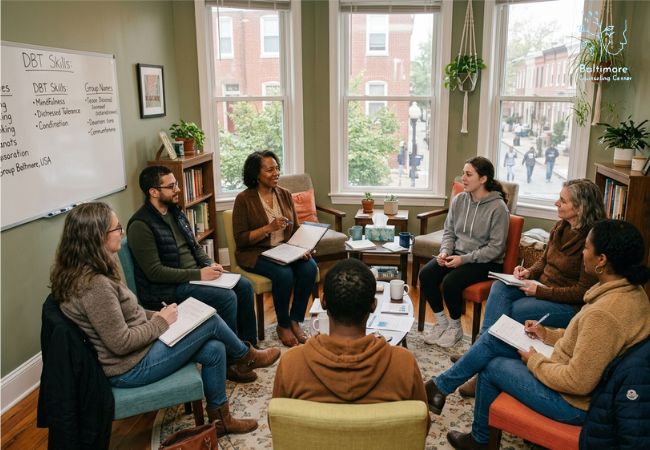
The Four Core Skills Taught in Group DBT Therapy
Mindfulness
Mindfulness is the foundation of all DBT work. Before you can change how you respond to emotions, you have to learn how to observe them clearly and without judgment. In The Resilience Room, mindfulness skills teach you how to stay grounded in the present moment, observe your thoughts and feelings without being swept away by them, and bring greater awareness to your choices and reactions in daily life.
Distress Tolerance
Life will always bring moments of intense pain and difficulty. Distress tolerance skills teach you how to get through those moments without making things worse. This module focuses on crisis survival strategies, radical acceptance of reality as it is, and building the capacity to tolerate discomfort without resorting to harmful or self-defeating behaviors. These are practical, immediately usable tools for your hardest moments.
Emotional Regulation Therapy
Emotional regulation is at the core of what makes DBT so effective. Many people who benefit most from DBT experience emotions that feel overwhelming, unpredictable, or impossible to control. This skill set teaches you to identify and name your emotions accurately, understand what triggers them, reduce emotional vulnerability over time, and change unwanted emotional states using evidence-based strategies. The goal is not to eliminate emotion -- it is to stop being ruled by it.
Interpersonal Effectiveness
Emotional intensity does not only affect how you feel inside. It profoundly affects how you relate to others. Interpersonal effectiveness skills teach you how to ask for what you need clearly and confidently, set and maintain healthy boundaries, navigate conflict without damaging relationships, and build and sustain connections that are genuinely nourishing. These skills address one of the most painful consequences of emotional dysregulation: the relational damage it can leave behind.
Who Can Benefit From The Resilience Room DBT Support Group
People With Intense or Unstable Emotions
If your emotional responses feel disproportionate to situations, shift rapidly, or take a long time to settle, DBT’s emotional regulation therapy offers a structured path toward greater stability and self-understanding.
People Struggling With Self-Destructive Patterns
Whether those patterns involve substance use, self-harm, disordered eating, impulsive decisions, or other harmful coping behaviors, DBT provides a compassionate, non-judgmental framework for building healthier alternatives.
People With Borderline Personality Disorder
DBT was originally developed for individuals with BPD and remains the gold-standard treatment. If you have been diagnosed with BPD or recognize its characteristics in your experience, The Resilience Room offers specialized, evidence-based support.
People With Borderline Personality Disorder
DBT was originally developed for individuals with BPD and remains the gold-standard treatment. If you have been diagnosed with BPD or recognize its characteristics in your experience, The Resilience Room offers specialized, evidence-based support.
People Who Feel Stuck in Therapy
If you have been in traditional talk therapy and feel like you are gaining insight but not changing your behaviors or patterns, DBT’s skills-based structure offers a different and often breakthrough approach.
Anyone Seeking Structured Emotional Support
You do not need a specific diagnosis to benefit from group DBT therapy. If you want practical, evidence-based tools for managing stress, improving relationships, and building emotional resilience, The Resilience Room is open to you.

How DBT Counseling Is Different From Traditional Talk Therapy
Traditional talk therapy is deeply valuable. It helps people understand themselves, process experiences, and gain insight into patterns. But for many people, insight alone is not enough to change behavior. DBT counseling services are explicitly skills-based. Every session teaches something concrete and actionable. You leave each group meeting with tools you can use that same day -- not just reflection, but practice. DBT also differs in its structure. The program follows a clear curriculum, progresses through defined skill modules, and holds members accountable to practicing between sessions. This structure is itself therapeutic for people who have struggled with chaos, inconsistency, or lack of follow-through. Finally, the group format of mental wellness group therapy adds a dimension traditional individual therapy cannot provide: the experience of learning alongside others, giving and receiving support, and discovering that you are not alone in what you carry.
What The Resilience Room Can Help You With
The Resilience Room DBT Group is particularly effective for:
- Emotional overwhelm and difficulty calming down after distress
- Anxiety that shows up as avoidance, panic, or constant worry
- Depression accompanied by hopelessness, numbness, or low motivation
- Relationship instability, fear of abandonment, or conflict patterns
- Impulsive behaviors that feel out of control
- Self-harm or thoughts of self-harm
- Chronic feelings of emptiness or identity confusion
- Difficulty tolerating uncertainty or sitting with discomfort
- Trauma responses that affect daily functioning and relationships
Frequently Asked Questions
What is Dialectical Behavior Therapy and how does The Resilience Room DBT Group work?
Who can benefit from joining a DBT support group for emotional regulation and mental wellness?
What skills are taught in group DBT therapy sessions at The Resilience Room DBT Group?
How is evidence-based DBT counseling different from traditional talk therapy?
Can The Resilience Room DBT Group help with stress, anxiety, emotional overwhelm, and relationship challenges?
Take the First Step Toward Resilience
You have carried enough alone. The Resilience Room DBT Group at Baltimore Counseling Center exists because healing is both a personal journey and a shared one — and because the right skills, taught in the right environment, genuinely change lives.
If you are ready to build emotional resilience, strengthen your relationships, and create a life that feels more stable and more yours, we are ready to welcome you.
Call us: +1 (443) 266-5533
Email: info@baltimorecounselingcenter.com
Location: 703 Dale Ave, Baltimore, MD 21206
Book online: baltimorecounselingcenter.simplybook.me
Baltimore Counseling Center — Evidence-Based Mental Health Care for Baltimore, Maryland